Good And Bad Hair Transplants: The 5 Biggest Visible Differences To Help You Make The Right Choice

Contents
Hair transplants are becoming more popular by the day. More people are actively looking for solutions to their thinning hair. And as the number of people seeking a hair transplant rises, so does the number of hair transplant providers. Whether all of them can actually perform a good hair transplant is another story.
On the internet and social media you can now find dozens of different hair transplant clinics within 10 kilometres of where you live.
As ideal as that sounds, it does not come without a cost. 2 in 10 hair transplants are not completed successfully. To protect you (and your hair) from a bad hair transplant, this article explains the biggest differences between good and bad hair transplants.
1. A natural look
First and often most important of all for the patient is how natural the hair transplant looks: “will my hair look natural after the treatment?”
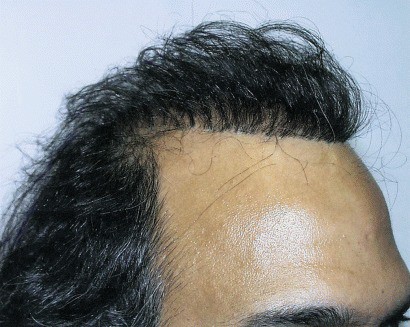
With a good hair transplant treatment, the implanted hair will be indistinguishable from the rest of the hair. With the naked eye you would never be able to tell that a hair transplant is there at all.
The most natural-looking hair transplant treatments are follicular unit extractions (FUE). In this treatment, healthy hair follicles are successfully implanted into bald areas of the scalp without any noticeable scarring, unlike follicular unit transplantation (FUT).
On top of that, the expertise of the operating surgeon also makes a big difference to how natural the hair looks. They know exactly how the implanted follicular units need to be placed in order to encourage hair growth that looks as natural as possible and matches the patient’s own hair.
Because anyone can present themselves online as a hair transplant specialist, we cannot say often enough that you should research the clinic and the practitioner as thoroughly as possible. So if you have any doubts, do ask to see the treating doctor’s qualifications. You should be able to obtain these from the hair transplant clinic itself or from the surgeon.
At the hair transplant clinic FueGenix, our expertise lies in placing the most natural-looking hair implants.
With a poorly performed hair transplant it is very obvious that there is a difference between the natural hair and the implanted hair. The implanted hair looks different from the natural hair and is often described as pluggy. This means the implanted hair looks like large clumps of hair sitting next to one another. Not like a single whole.
These results are common with older hair transplant techniques, such as the plug method.
2. Placement
The next visible characteristic is the placement of the hair implants.
In a hair transplant treatment that has been carried out well, the hair is removed from the back or side of the head using small circular movements. This aids the process of moving the healthy hair follicles to the transplant areas. And this is done precisely during an FUE hair transplant.
This placement, provided it is carried out by a qualified surgeon, ensures the hair grafts are positioned well. That surgeon will also have the right knowledge of the number of hair grafts that will be needed for the area being treated.
In a bad hair transplant the hair is not placed in the right spots, in the right quantities or at the right angles. What then happens is that the hair once again ends up looking unnatural, and can be perceived as “ugly”.
Here too the result depends on the treating doctor. Their knowledge and experience will be decisive for the success of the hair transplant results.
3. Scarring
Scarring is another good indication of the quality of a hair transplant. Because scars are understandably experienced as very negative by hair transplant patients, it is important to understand clearly when and why scarring can occur during a transplant treatment.
It is important to understand that during a modern FUE hair transplant, individual hair follicular units are removed using small circular movements. This means it is no longer necessary to remove a piece of scalp, which is a requirement with FUT.
With the FUE technique no stitches are required. What can happen is that small circular scars may form in the places where the hair has been extracted. These scars are, however, small and invisible when the treatment has been carried out by a qualified doctor.
During the treatment you are always given a local anaesthetic. So you will not feel what is happening during the treatment. The type of anaesthetic used naturally depends on the hair transplant clinic you have chosen.
With a bad hair transplant you end up with visible scarring because too much hair has been taken from a donor area.
So even though a hair transplant is a surgical procedure, it does not have to leave a scar behind – provided, of course, that it is carried out in the right way and by an experienced practitioner.
4. Hair thickness
This next characteristic has everything to do with hair growth after a hair transplant. The reason for a hair transplant is always that someone wants more hair. When the hair is sparse or grows poorly after a treatment, patients are understandably disappointed. That disappointment need not happen, though, provided the right clinic and doctor have been chosen.
With a well-performed hair transplant, the hair will grow in the same way as the body’s own natural, healthy hair. The implanted hair will therefore be indistinguishable from the natural hair.
With a bad hair transplant the hair will grow in thinner than the natural hair. Aesthetically this does not look good. On top of that, you as the patient will most likely still not be happy with your hair, just as you were not before the treatment.
5. Donor area recovery
The final point concerns the donor area. The recovery of the donor area is important for the end result of the hair transplant.
Once the treatment has healed, it should not be possible to see on the donor site that hair has been taken from that area. With a good treatment that is exactly the case.
With a failed treatment you can see on the donor area that too much hair has been taken. It looks like an empty patch on the scalp with less hair. Some patients even experience this as “hair loss” after a treatment, because there is now less hair growth, or none at all, in other places (namely the donor areas).
With a bad hair transplant it can happen that the hair transplant specialist extracts too many hair grafts. This is called over-harvesting. And it ultimately results in visibly thin patches of hair in the donor area. In some cases it is so severe that complete donor alopecia develops.
In that case it would have been better not to have a hair transplant at all.
What matters when choosing between hair transplants
Choosing the right practitioner is therefore crucial when you are considering a hair transplant. The points above are the most important things for you, as someone experiencing hair loss, to watch out for if you want a successful hair transplant.
Besides the practitioner, it is of course also important to choose the right clinic. The number of hair transplant clinics in the Netherlands is enormous. But the right clinic will support you not only during your treatment period, but before and after it as well. The clinic will inform and support you properly while you make the right choice. And should anything go wrong (which of course will not be the case if you choose a good clinic), a good clinic will make sure the right solution is found for your problem.
The most important thing to watch out for remains the result. Make sure you are well informed about the clinic as well as the treating doctor. As explained above, a badly performed hair transplant will make you even unhappier than living with hair loss.
Only a well-performed hair transplant will deliver successful results. And with them, a full head of hair!
Discover More

Buy Cheap, Pay Twice
A cheap hair transplant with an unlimited number of grafts sounds appealing. But your donor area is finite, and rushed work damages it permanently.
Read More
Thinning Hair In Women
Hair loss is often seen as a male problem, yet it affects at least a third of women. Women usually experience thinning hair rather than going bald, and there are several possible underlying causes.
Read More
Hair Loss In Men
Male pattern baldness affects most men at some point in their lives. It usually takes 15 to 25 years to develop, it is difficult to predict, and it always follows a recognisable pattern.
Read More